The Netherlands has world-class flood defences. But no system is infallible. For an academic hospital like Erasmus MC — one of Europe’s largest medical centres, in the heart of Rotterdam, largely below sea level — a single failure in the water management chain could trigger a cascade of life-threatening consequences: submerged basements, failing generators, critical systems going dark, patients who cannot be moved. This business case was developed as a strategic proposal to explore how such a hospital could structurally prepare for exactly this scenario. Nederland heeft wereldklasse waterkeringen. Maar geen enkel systeem is onfeilbaar. Voor een academisch ziekenhuis als het Erasmus MC — een van de grootste medische centra van Europa, in het hart van Rotterdam, grotendeels onder zeeniveau — kan één falen in de waterketen een cascade van levensbedreigende gevolgen veroorzaken: ondergelopen kelders, uitvallende generatoren, kritieke systemen die uitvallen, patiënten die niet verplaatst kunnen worden. Deze business case werd ontwikkeld als strategisch voorstel om te verkennen hoe een dergelijk ziekenhuis zich structureel op precies dit scenario zou kunnen voorbereiden.
Opening: Preparation Phase Opening: Voorbereidingsfase
Like a chess player who thinks several moves ahead, crisis preparedness begins long before the first drop of water enters the building. The strategy maps six concrete preparation pillars: scenario planning for multiple flood triggers, pre-defined evacuation zones and transport routes, strategic positioning of staff and resources, securing essential supplies (electricity, water, food, medication), and anticipating patient influx from surrounding hospitals that may be compromised first. Zoals een schaker die meerdere zetten vooruitdenkt, begint crisisparaatheid lang voordat de eerste druppel water het gebouw binnenkomt. De strategie brengt zes concrete voorbereidingspijlers in kaart: scenarioplanning voor meerdere overstromingstriggers, vooraf bepaalde evacuatiezones en transportroutes, strategische positionering van personeel en middelen, het veiligstellen van essentiële voorraden (elektriciteit, water, voeding, medicatie) en het anticiperen op patiëntentoestroom uit omliggende ziekenhuizen die eerder worden bedreigd.
Midgame: Crisis Response Middenspel: Crisisrespons
When water rises, the margin for error collapses. The response phase focuses on seven operational imperatives: tactical coordination under pressure, real-time triage, relocating vulnerable patients to safety, protecting critical equipment, rapid decision-making with limited information, managing external patient influx, and receiving flood victims directly. The central goal: preventing tactical failures through pre-drilled protocols. Not improvisation — execution. Wanneer het water stijgt, verdwijnt de foutmarge. De responsfase richt zich op zeven operationele imperatieven: tactische afstemming onder druk, real-time triage, het verplaatsen van kwetsbare patiënten naar veiligheid, het beschermen van kritieke apparatuur, snel beslissen met beperkte informatie, het managen van externe patiëntentoestroom en het opvangen van directe overstromingsslachtoffers. Het centrale doel: tactische fouten voorkomen door vooraf geoefende draaiboeken. Niet improviseren — uitvoeren.
Endgame: Recovery Eindspel: Herstel
Recovery is not the end of the crisis — it is the beginning of the next cycle of resilience. The strategy defines six recovery actions: gradually restoring hospital capacity, redistributing staff, restoring utilities, infection prevention (flood water must be treated as contaminated), documentation and evaluation, and structural reassessment of facilities including electrical, water and gas systems. Herstel is niet het einde van de crisis — het is het begin van de volgende veerkrachtcyclus. De strategie definieert zes herstelacties: het geleidelijk herstellen van ziekenhuiscapaciteit, herverdeling van personeel, herstel van nutsvoorzieningen, infectiepreventie (overstromingswater moet als besmet worden beschouwd), documentatie en evaluatie, en structurele herbeoordeling van faciliteiten inclusief elektriciteits-, water- en gassystemen.
The Strategic Move: VR Crisis Training De Strategische Zet: VR-crisistraining
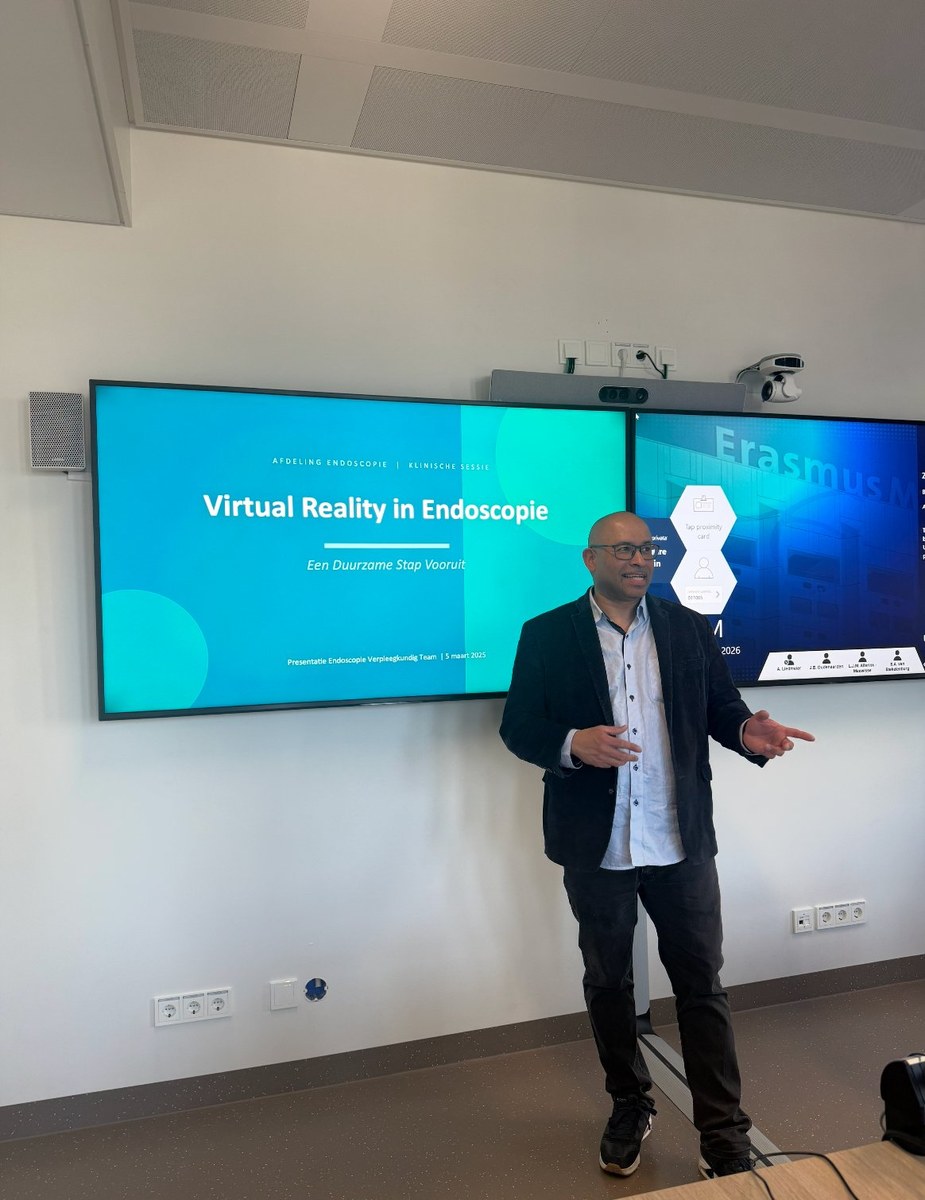
Paper protocols are not enough. The game-changer in this strategy is the integration of Virtual Reality crisis scenario training within the Erasmus MC Education Centre. VR allows entire teams to rehearse complex flood scenarios without disrupting live patient care — with real time pressure, real decisions, real stress. The technology is scalable across departments and transferable to other crisis types: fire, cyberattack, pandemic, terrorism. One investment, multiple returns. Papieren protocollen zijn niet genoeg. De game-changer in deze strategie is de integratie van Virtual Reality-crisisscenariotraining binnen het Erasmus MC Onderwijscentrum. VR stelt volledige teams in staat complexe overstromingsscenario's te oefenen zonder acute zorgverlening te verstoren — met echte tijdsdruk, echte beslissingen, echte stress. De technologie is schaalbaar over afdelingen en overdraagbaar naar andere crisistypen: brand, cyberaanval, pandemie, terrorisme. Één investering, meervoudige opbrengst.
Stakeholders & Getting Everyone on Board Stakeholders & Iedereen meekrijgen
A crisis strategy without buy-in is a document gathering dust. The business case maps the full stakeholder landscape — from the Board of Directors and medical staff to the BCM team, Veiligheidsregio/GHOR, municipality, water boards and suppliers — and provides a concrete playbook for securing commitment: leveraging existing meeting structures, demonstrating quick wins, and making the urgency tangible. What happens to ICU patients if Generator X fails during a flood? Make it concrete. Make it urgent. Een crisisstrategie zonder draagvlak is een document dat stof verzamelt. De business case brengt het volledige stakeholderlandschap in kaart — van de Raad van Bestuur en medisch personeel tot het BCM-team, Veiligheidsregio/GHOR, gemeente, waterschappen en leveranciers — en biedt een concreet draaiboek voor het verkrijgen van commitment: gebruik bestaande overlegstructuren, toon quick wins en maak de urgentie tastbaar. Wat gebeurt er met IC-patiënten als generator X uitvalt tijdens een overstroming? Maak het concreet. Maak het urgent.
“When the water rises, care must stand firm. This strategic framework shows how academic hospitals can prepare — before the crisis, not during it.” “Als het water stijgt, moet de zorg overeind blijven. Dit strategisch kader laat zien hoe academische ziekenhuizen zich kunnen voorbereiden — vóór de crisis, niet tijdens.”
Roy Wesenhagen, MSc Healthcare Management